- Ocean Chronicles
- Posts
- Nature's Ultimate Bite 🦈
Nature's Ultimate Bite 🦈
Shark Teeth 101
If you’ve ever strolled along the beach and found a triangular, fossilized gem tucked into the sand, chances are you’ve discovered one of nature’s coolest relics: a shark tooth.
But these aren’t just random ocean souvenirs — they’re a window into millions of years of evolution, survival, and sea monsters. In this edition, we’re diving tooth-first into the fascinating world of shark teeth.
🦈 What Makes Shark Teeth So Special?
Shark teeth are among the most common fossils found on Earth — and for good reason. Sharks don’t have just one set of teeth like we do. In fact, they have rows of them, and they shed thousands over a lifetime.
🦷 Some sharks lose a tooth every week, and in their lifetime, a single shark can produce up to 35,000 teeth!

🔹 Types of Shark Teeth: A Shape for Every Job
Shark teeth aren’t one-size-fits-all. Their shape depends entirely on what the shark eats:
• Pointed, needle-like teeth – Great for gripping slippery prey like fish (e.g., Sand Tiger Sharks)
• Triangular, serrated teeth – Designed for slicing through flesh (e.g., Great White Sharks)
• Flat, crushing teeth – Used to smash shells and crustaceans (e.g., Nurse Sharks)
• Tiny, hook-like teeth – Found in filter-feeders like Whale Sharks
So the next time you find a tooth, its shape may just tell you what its owner was munching on.

🔹 Why Are Fossilized Teeth Often Black?
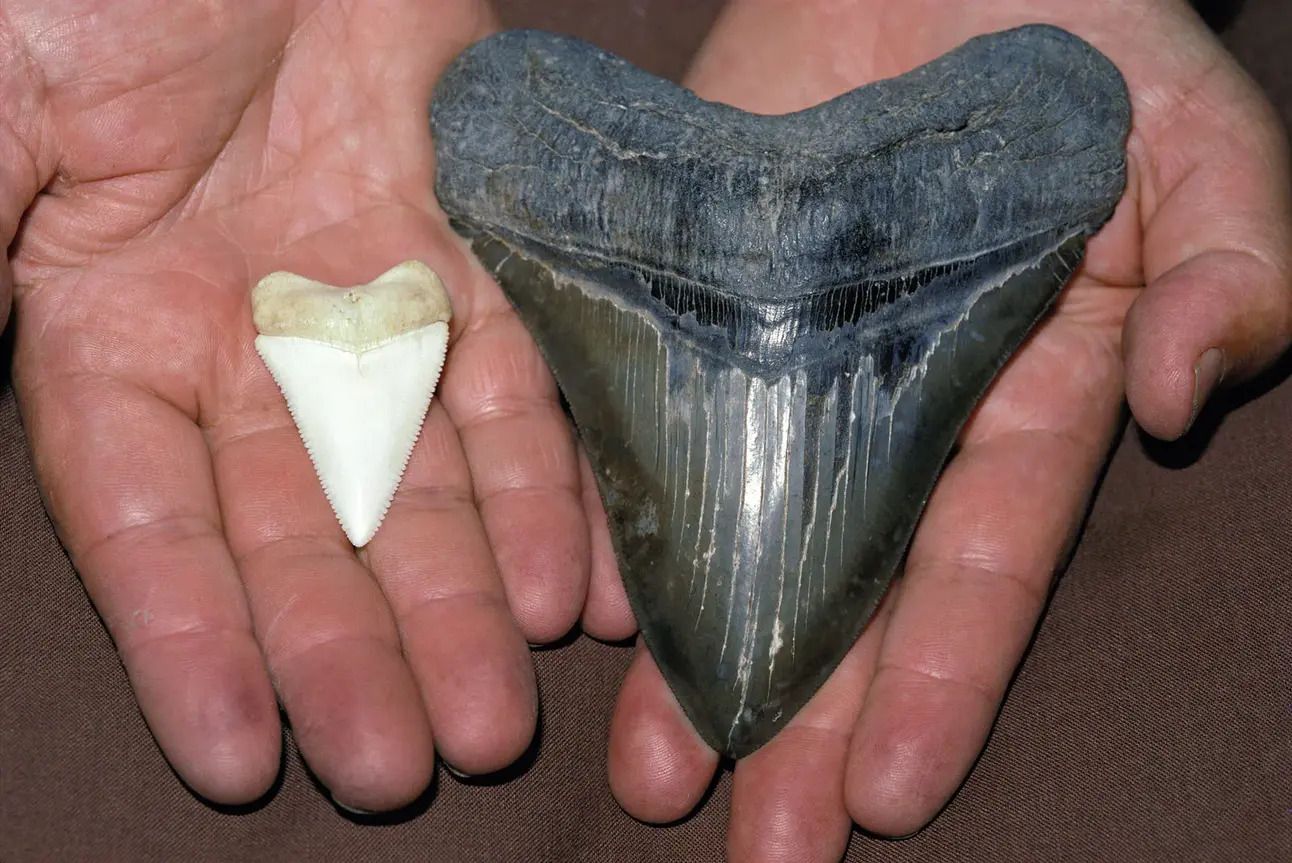
Freshly lost shark teeth are typically white or off-white, but over time, minerals seep into the tooth, replacing the organic material. Depending on the minerals present, fossilized teeth can be black, brown, gray, or even blue.
The darker the tooth, the older it probably is — some Megalodon teeth are over 20 million years old.
🔹 Best Place to Find Them?
If you’re itching to start collecting:
• Venice Beach, FL – The unofficial shark tooth capital
• Calvert Cliffs, MD – Fossils galore on the Chesapeake Bay
• Fossil Beach, VA, or Peace River, FL – More hidden treasure spots
Pro tip: Look at low tide, near shell beds, or after storms for the best hunting.

Clean Ocean Crew
If you enjoy Ocean Chronicles and want to take action for the ocean, $5 /month removes one pound of plastic from our seas and keeps this newsletter going.
Join the Clean Ocean Crew today!
Thank you for joining us on this dive into the depths of Ocean Chronicles! If someone forwarded you this email, you can subscribe for free by clicking the button below.